
The prevalence of social media clearly encourages life documentation and content creation- from videos of a child’s first steps to instagram photos of last night’s dinner. As a result, the way that people create and store memories is changing. This is compounded with the sheer magnitude of content that is created (including the 200 million tweets and 250 million Facebook photos that are uploaded per day), which affects the actual amount people can remember. To address this, a growing number of services and brands are organizing to this forgotten information and adding meaning to these dormant memories.
Over the last few years, the Internet has had a profound effect on how people remember things during the experience and also afterwards. People rely on the Internet to act as an external hard drive where information is stored outside of their heads. Called the Google Effect, people actually remember less if they know where to access it if they need it. As a result, people spend less time thinking about what they’re experiencing or posting, because they know that they can revisit it later.
But past social media content is also getting cluttered with content, making memories harder to find. Usage of social media grew 66% between 2009 and 2010, giving users even more opportunities to create content. With the adoption of even more publishing and creative sites, like Tumblr and Pinterest, there are even more ways for people to generate photos, videos, and text. Media that we assumed we could easily access is now hidden under hundreds of Facebook photos, thousands of comments— the massive amounts of content that we now create every day. These digital footprints are typically thought of in the short term and they are consumed and disposed of thoughtlessly.
Memory engineering, as it is referred to by Clive Thompson, is “the process of fashioning our inchoate digital pasts into useful memories.” Social media websites in particular are evolving to offer ways to reshape how we re-visit our digital memories. These sites are doing this by creating sense, order, and utility out of our ever-growing digital footprints and using it to create content that is interesting and meaningful.
When users revisit their content, they don’t necessarily want an algorithm to decide what was meaningful to them based on the most likes or comments. They want to find the content and memories that are meaningful to them. Brands can help to do that by giving the context to them and allowing the user to create, or find, their own meanings.
The Museum of Me, an effort by Intel to create a visual achieve of this digital information, was an example of how brands could use using consumers’ own memories to create an experience. Brands can also add value to their consumers’ lives by creating useful memories, like how Orangina International reminds users of their Facebook firsts.
These memory instigators are frequently simple (just a few words or a photo) but they can trigger a larger story as the brain fills in the details. These memories can be episodic- like Foursquare and seven years ago, which reminds Foursquare users of where they were exactly a year ago via daily email. Or, these memories can be semantic, like the Kindle’s Daily Review app, which takes news clippings and reminds users of them weeks or months later to assist retention.
The latest Facebook profile Timeline redesign, which changed the Facebook’s profile page into a historical record of that user’s interactions, is a clear example of this trend. Regarding the update, product manager Sam Lessin said “Imagine if there was an easy way to rediscover the things you shared, and collect all your best moments in a single place. With Timeline, now you have a home for all the great stories you’ve already shared. They don’t just vanish as you add new stuff.”
By being able to organize digital collections, brands can help people collect their memories in a meaningful and relevant. The focus of social media is expanding from just content creation to memory facilitation and utility. These memories can tap in to deep human desires and create an emotional bond with a digital entity. Memory engineering is the next step in creating a meaningful digital relationship.
(reposted from)
Showing posts with label advertising. Show all posts
Showing posts with label advertising. Show all posts
Tuesday, November 15, 2011
Friday, September 30, 2011
Agency Obfuscation Game
What I did my last days at Tribal: create the Agency Obfuscation Game with some coworkers. Each phrase below is an agency, obscured by hints, homophones and bloated word choice. Highlight text below for answers. And comment with your own!
Fruit Amphibian
Strawberry Frog
Really Big
Huge
Foreign Currency
Euro
Black and White
Grey
What Lil John Gets
Lowe
Nickelodeon Hey!
Arnold
Sprechen Sie
Deutsch
Cinco Drugs
Droga5
Ponderin'
Mullen
Superman's Boyfriend
Wunderman
All Natural
Organic
Zodiac Sign + Non-Blonde
Leo Burnett
484
22squared
Scottish Metallic Container
McCann
Increase Width and President
Wieden and Kennedy
British Chip in Stout
Crispin Porter
First Copy, Federal Credit Bureau
Draft FCB
Mountain Vacation
Hill Holliday
Congregation of Cavemen
Barbarian Group
Au Revoir - E
Goodby
Double bonus hard one:
Bad thing that could happen to a car, and what you do after it
Dentsu
Fruit Amphibian
Strawberry Frog
Really Big
Huge
Foreign Currency
Euro
Black and White
Grey
What Lil John Gets
Lowe
Nickelodeon Hey!
Arnold
Sprechen Sie
Deutsch
Cinco Drugs
Droga5
Ponderin'
Mullen
Superman's Boyfriend
Wunderman
All Natural
Organic
Zodiac Sign + Non-Blonde
Leo Burnett
484
22squared
Scottish Metallic Container
McCann
Increase Width and President
Wieden and Kennedy
British Chip in Stout
Crispin Porter
First Copy, Federal Credit Bureau
Draft FCB
Mountain Vacation
Hill Holliday
Congregation of Cavemen
Barbarian Group
Au Revoir - E
Goodby
Double bonus hard one:
Bad thing that could happen to a car, and what you do after it
Dentsu
Tuesday, May 12, 2009
14 of the Oldest Logos Still Used Today
I love the story Paul Rand and his refusal to redesign the GE logo (see below). It got me thinking- what other logos have had the same design for over 100 years?
Here, I put together a list of 14 logos that are still recognizable in the US that were registered in 1900 or earlier (I tried to limit the car and alcohol logos because they were the most common).
read more

Tiffany’s Tiffany Blue
1837

Brooks Bothers
1850
Fun fact: Brooks Brothers is oldest surviving men's clothier in the United States

Arm & Hammer
1860s
Fun fact: the Arm and Hammer logo represents Vulcan, the Roman god of fire and metalworking.

Guinness
1862
Fun fact: The symbol is the harp of Brian Boru, which was a symbol of Ireland since the reign of Henry VIII (16th century). Guinness adopted the harp as a logo in 1862; however, it faces left instead of right, as in the Irish coat of arms.

Red Cross
1864
Designed by Henri Dunant
Fun fact: The logo was established, along with the organization, at the Geneva Convention

Mitsubishi
1870
Designed by Yataro Iwasaki
Mitsubishi was started as a shipping firm and the three diamonds represented a ship's propellers.

Anheuser Busch
1872
Fun fact: The Budweiser Clydesdales were introduced on April 7, 1933, to celebrate the repeal of Prohibition for beer.

Bass
1875, but allegedly used since the 1600s
Fun fact: It’s one of the oldest logos in the world and is reg. no. 1 in the UK

Coca-Cola
1885
Designed by John Pemberton's partner and bookkeeper, Frank Mason Robinson

General Electric
1890
Designed by Emmanuel Orazi
Fun fact: Paul Rand was asked to redesign the logo in the mid-20th century. He refused to touch the "masterpiece" and prompted GE to keep their iconic Art Deco trademark.

Fruit of the Loom
1893
Designer: farmer Rufus Skeel, whose daughter painted pictures of red apples

Louis Vuitton
1896
Fun fact: The logo was originally created to prevent counterfeiting. Today, LV is one of the most heavily counterfeited in fashion history, with just over 1% of the items in circulation considered authentic.

Michelin
1898
Designed by O'Galop
Fun fact: Tires weren't colored black until 1912, which is why the Michelin man is white.

Goodyear
1900
Fun fact: The logo is based on a statue of Mercury from the Seiberling family’s home
This information came from all over the internet, including corporate websites, Wikipedia (totally legit), and:
http://www.dinesh.com
schwimmerlegal.com
logoorange.com
logodesignlove.com
logoblog.org
money.cnn.com
Let me know if there are any corrections or if you know any more!
Here, I put together a list of 14 logos that are still recognizable in the US that were registered in 1900 or earlier (I tried to limit the car and alcohol logos because they were the most common).
read more

Tiffany’s Tiffany Blue
1837

Brooks Bothers
1850
Fun fact: Brooks Brothers is oldest surviving men's clothier in the United States

Arm & Hammer
1860s
Fun fact: the Arm and Hammer logo represents Vulcan, the Roman god of fire and metalworking.

Guinness
1862
Fun fact: The symbol is the harp of Brian Boru, which was a symbol of Ireland since the reign of Henry VIII (16th century). Guinness adopted the harp as a logo in 1862; however, it faces left instead of right, as in the Irish coat of arms.

Red Cross
1864
Designed by Henri Dunant
Fun fact: The logo was established, along with the organization, at the Geneva Convention

Mitsubishi
1870
Designed by Yataro Iwasaki
Mitsubishi was started as a shipping firm and the three diamonds represented a ship's propellers.

Anheuser Busch
1872
Fun fact: The Budweiser Clydesdales were introduced on April 7, 1933, to celebrate the repeal of Prohibition for beer.
Bass
1875, but allegedly used since the 1600s
Fun fact: It’s one of the oldest logos in the world and is reg. no. 1 in the UK
Coca-Cola
1885
Designed by John Pemberton's partner and bookkeeper, Frank Mason Robinson

General Electric
1890
Designed by Emmanuel Orazi
Fun fact: Paul Rand was asked to redesign the logo in the mid-20th century. He refused to touch the "masterpiece" and prompted GE to keep their iconic Art Deco trademark.

Fruit of the Loom
1893
Designer: farmer Rufus Skeel, whose daughter painted pictures of red apples

Louis Vuitton
1896
Fun fact: The logo was originally created to prevent counterfeiting. Today, LV is one of the most heavily counterfeited in fashion history, with just over 1% of the items in circulation considered authentic.

Michelin
1898
Designed by O'Galop
Fun fact: Tires weren't colored black until 1912, which is why the Michelin man is white.

Goodyear
1900
Fun fact: The logo is based on a statue of Mercury from the Seiberling family’s home
This information came from all over the internet, including corporate websites, Wikipedia (totally legit), and:
http://www.dinesh.com
schwimmerlegal.com
logoorange.com
logodesignlove.com
logoblog.org
money.cnn.com
Let me know if there are any corrections or if you know any more!
Friday, February 13, 2009
Oh Baby Baby!
 I've had this in my head for a while now, and Hulu's new campaign with Boomer Alec Baldwin aimed at those Boomers instead of young, cool kids like me got me thinking again.
In the age of "Jesus Christ on a bicycle my Mom just Facebook friended me," people are re-evaluating Boomers. I feel like there was always a skepticism about treating the Boomers as anything from vacation-loving retirees, but now the view is changing as Boomers are reestablishing themselves as informed and active users of modern communications.
The Reader’s Digest version:
- Boomers are used to adapting to new technology; they’ve done this all their lives
- The latest technological development, the internet, create a distinction between them and later generations
- Boomers learned on their own terms when it was relevant to them, especially from having to use technology in their careers
- Boomers don't think they're old or out of touch and resent being treated that way
- There is a distinction between common knowledge and universal knowledge. Boomers might not know what seems obvious
- Regardless, Boomers are still a valuable market who use everything from Hulu to Wii to Twitter
read more
Slowly, Gen X and Y-ers are coming to terms with the fact that their Mom is listening to her iPod at the grocery store and their Dad is TiVoing the Duke game.
There’s always been a general enthusiasm my generation, because Millennials are considered to be different: They grew up in a time where technology was rapidly developing and have been using computers for most of our lives.

But Boomers are different, too. They've been part of this communication revolution just as my generation has, but in a different way. A year after the first Baby Boomer was born, another landmark in American History occurred: in 1947, the transistor was invented.
Boomers grew up in a world that has always had the transistor and the technology that comes along with it. They grew up after radio and television were invented and during their lifetime a multitude of other devices were invented, from the personal stereo to the Internet.
Throughout their lifetime, Boomers have adapted to new technology and incorporated these new advances into their lives to make them easier and richer. Through their careers, Boomers have grown acquainted with the Internet and cell phones. They integrated technology into their daily lives because of their careers and are likely to continue to use the same technology after they retire.

But here is where the important distinction is made. Millennials all started on the same level and worked up to a decent grasp of technology together. Boomers, on the other hand, learned on their own time when they needed it.
Instead of being forced to learn about computers through school or hearing about new, fun ways to use the internet to communicate and play with friends like Gen X and Y, Boomers have adapted to technology on their own time.
So marketing to Boomers is different, too. Boomers are not technologically illiterate, but they approach technology differently. They are still active members of the communications world and need to be communicated to appropriately.
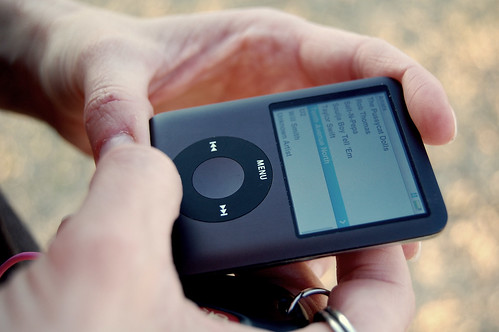
Communicating to Boomer appropriately does not mean creating a dumbed-down version. Boomers do not consider themselves old and reject things that seemed obviously aimed towards Boomers. Instead, they embrace what is relevant to their lives.
Matt Thornhill, president of The Boomer Project, says, “The biggest misconception about Baby Boomers is they think they are old…Boomers do not consider themselves old. They are putting off old age…They are continuing to follow the same patterns they have in the past.”

What to remember is that Boomers are involved with current technology, but they might not use it in the same way as the younger generations. I realized this when I came across a (heavily highlighted) print out of this article on my parent's desk. This "Tech Tips for the Basic Computer User" post makes the distinction between common knowledge and universal knowledge. You might think that something like Ctrl-C is stamped in everyone’s mind, but that is not necessarily the case.
Boomers are no longer the geriatric stereotypes that many consider them. Luckily, there examples emerging that correspond with the redefinition of the Boomers.
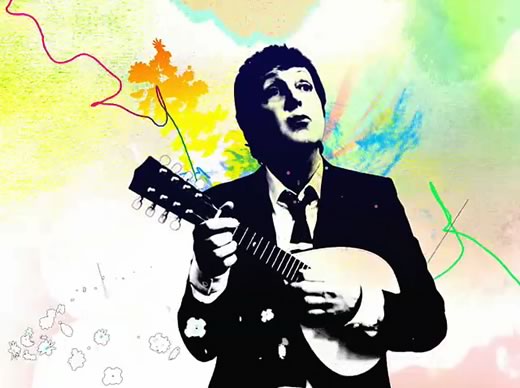
An early example is from 2007, when Paul McCartney appeared in an iPod commercial. Paul is a timeless figure, but Apple was actually doing some smart marketing. 33% of Baby Boomers own an Early Lifecycle Portable Electronic Product (like an MP3 player or a portable DVD player), while the national average for adults is 30% (Lifestyles of Baby Boomers - Mintel Reports).
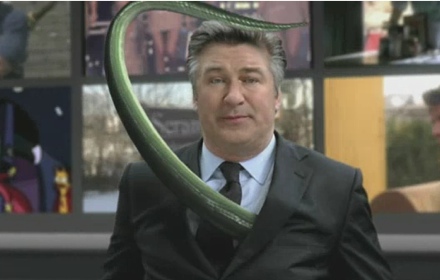
Hulu recently used Alec Baldwin in their SuperBowl commercial. At first glance, it seems like a strange choice because Alec’s age peers are not necessarily what someone would imagine using Hulu. But in actuality, the Wall Street Journal reported that:
When the company launched its public site last March, the largest age group visiting the site were those Internet visitors over 55 years old, accounting for 47% of all site visits, while traditionally younger early adopters accounted for only 17% of traffic. (via 5 Blogs Before Lunch)

The recent movie Last Chance Harvey was actually a cultural landmark for Boomers.
The nice thing here is that the movie is about the lives of the older characters, not just about them being someone’s grandparent or mentor.(Savvy Boomer via PSFK)Boomers are a huge market for everything from Wiis (hey-Nintendo says 25% of their gamers are 50+) to YouTube, and it is important to realize that, really, even granny can get a blog.
images from here, here, here, here, here, here, here, here, and here. Geez.
Tuesday, January 20, 2009
Just Google It
The trailer for the disaster movie 2012 has an great twist.

read more
Instead of having a silly-sounding but nonetheless x-treme call to action like many other movies have, this trailer encourages the viewers to educate themselves about the events inspiring the movie.
Typically, it's very bad if your website isn't one of the first results on Google. But in this case, the movie is making this fact work for them. It's actually making Google work for it, too.
Following examples like the Blair Witch project ("No, man, that stuff is REAL"), 2012 is attempting to utilize outside information that will hopefully create more hype about the movie.
The accompanying line is notable, too. "Find out the truth" corresponds with the online emphasis on truth and reality, as evidenced in numerous studies and websites devoted to uncovering scams.
View the trailer here and of course, google 2012 for yourself.

read more
Instead of having a silly-sounding but nonetheless x-treme call to action like many other movies have, this trailer encourages the viewers to educate themselves about the events inspiring the movie.
Typically, it's very bad if your website isn't one of the first results on Google. But in this case, the movie is making this fact work for them. It's actually making Google work for it, too.
Following examples like the Blair Witch project ("No, man, that stuff is REAL"), 2012 is attempting to utilize outside information that will hopefully create more hype about the movie.
The accompanying line is notable, too. "Find out the truth" corresponds with the online emphasis on truth and reality, as evidenced in numerous studies and websites devoted to uncovering scams.
View the trailer here and of course, google 2012 for yourself.
Friday, November 21, 2008
Those Who Don't Know History...
Good thing I know random, irrelevant history. It seems to come in handy never in blog postings.
I read today that Dr. Pepper is almost accidentally giving away Dr. Pepper until Feb. 28. All you have to do is get a coupon on Sunday at 12:01 a.m. I'd have my calendar marked because I LOVE free stuff, but unfortunately (?) I'm going to be in Berlin this weekend.
read more
So why the free soda?

It's similar to something that happened in the 1920s + 30s that I read about a few years ago and somehow managed to recollect. Burma-Shave, a shaving cream was famous for it's had a series of clever poems on roadsides. Eventually, they crafted half-joking promotions like this one :
Burma:
Of course, all of this amounted to massive publicity to Burma Shave (obviously, because almost 100 years later I still know about it). I think it's a great story of a company that was years ahead of it's time.

Cheers!
Burma info from Snopes. com + pictures from Digital Media Library and couponcravings.com
I read today that Dr. Pepper is almost accidentally giving away Dr. Pepper until Feb. 28. All you have to do is get a coupon on Sunday at 12:01 a.m. I'd have my calendar marked because I LOVE free stuff, but unfortunately (?) I'm going to be in Berlin this weekend.
read more
So why the free soda?
Dr Pepper is making good on its promise of free soda now that the release of Guns N' Roses' "Chinese Democracy" is a reality. The soft-drink maker said in March that it would give a free soda to everyone in America if the album dropped in 2008. "Chinese Democracy," infamously delayed since recording began in 1994, goes on sale Sunday.I think that's a hilarious compilation between the two parties. But hey, it gets some people free soda and others the amusement of a new Guns N' Roses album. Win win.

It's similar to something that happened in the 1920s + 30s that I read about a few years ago and somehow managed to recollect. Burma-Shave, a shaving cream was famous for it's had a series of clever poems on roadsides. Eventually, they crafted half-joking promotions like this one :
Free Offer! Free Offer!Not surprisingly, people actually sending in their fenders. The amused employees traded the junk yard scraps or toy fenders for jars of Burma-Shave. The next series, the company believed, would surely be realized as spoof.
Rip A Fender
Off Your Car
Mail It In For
A Half-Pound Jar
Burma-Shave
Free — FreeArliss French, though, Chicago's 1920s BAMF managed to procure the necessary jars. After a series of rhyming telegrams (web 0.0)....
A Trip To Mars
For 900
Empty Jars
Burma-Shave
Burma:
If A TripFrench:
To Mars You Earn
Remember, Friend
There's No Return
Let's Not QuibbleBurma:
Let's Not Fret
Gather Your Forces
I'm All Set
Our Rockets Are Ready.....Burma-Shave agreed to send French, his wife, and 12 children to a German town pronounced "Mars."
We Ain't Splitting Hairs
Just Send Us The Jars
And Arrange Your Affairs
Of course, all of this amounted to massive publicity to Burma Shave (obviously, because almost 100 years later I still know about it). I think it's a great story of a company that was years ahead of it's time.
Cheers!
Burma info from Snopes. com + pictures from Digital Media Library and couponcravings.com
Subscribe to:
Posts (Atom)
