
The prevalence of social media clearly encourages life documentation and content creation- from videos of a child’s first steps to instagram photos of last night’s dinner. As a result, the way that people create and store memories is changing. This is compounded with the sheer magnitude of content that is created (including the 200 million tweets and 250 million Facebook photos that are uploaded per day), which affects the actual amount people can remember. To address this, a growing number of services and brands are organizing to this forgotten information and adding meaning to these dormant memories.
Over the last few years, the Internet has had a profound effect on how people remember things during the experience and also afterwards. People rely on the Internet to act as an external hard drive where information is stored outside of their heads. Called the Google Effect, people actually remember less if they know where to access it if they need it. As a result, people spend less time thinking about what they’re experiencing or posting, because they know that they can revisit it later.
But past social media content is also getting cluttered with content, making memories harder to find. Usage of social media grew 66% between 2009 and 2010, giving users even more opportunities to create content. With the adoption of even more publishing and creative sites, like Tumblr and Pinterest, there are even more ways for people to generate photos, videos, and text. Media that we assumed we could easily access is now hidden under hundreds of Facebook photos, thousands of comments— the massive amounts of content that we now create every day. These digital footprints are typically thought of in the short term and they are consumed and disposed of thoughtlessly.
Memory engineering, as it is referred to by Clive Thompson, is “the process of fashioning our inchoate digital pasts into useful memories.” Social media websites in particular are evolving to offer ways to reshape how we re-visit our digital memories. These sites are doing this by creating sense, order, and utility out of our ever-growing digital footprints and using it to create content that is interesting and meaningful.
When users revisit their content, they don’t necessarily want an algorithm to decide what was meaningful to them based on the most likes or comments. They want to find the content and memories that are meaningful to them. Brands can help to do that by giving the context to them and allowing the user to create, or find, their own meanings.
The Museum of Me, an effort by Intel to create a visual achieve of this digital information, was an example of how brands could use using consumers’ own memories to create an experience. Brands can also add value to their consumers’ lives by creating useful memories, like how Orangina International reminds users of their Facebook firsts.
These memory instigators are frequently simple (just a few words or a photo) but they can trigger a larger story as the brain fills in the details. These memories can be episodic- like Foursquare and seven years ago, which reminds Foursquare users of where they were exactly a year ago via daily email. Or, these memories can be semantic, like the Kindle’s Daily Review app, which takes news clippings and reminds users of them weeks or months later to assist retention.
The latest Facebook profile Timeline redesign, which changed the Facebook’s profile page into a historical record of that user’s interactions, is a clear example of this trend. Regarding the update, product manager Sam Lessin said “Imagine if there was an easy way to rediscover the things you shared, and collect all your best moments in a single place. With Timeline, now you have a home for all the great stories you’ve already shared. They don’t just vanish as you add new stuff.”
By being able to organize digital collections, brands can help people collect their memories in a meaningful and relevant. The focus of social media is expanding from just content creation to memory facilitation and utility. These memories can tap in to deep human desires and create an emotional bond with a digital entity. Memory engineering is the next step in creating a meaningful digital relationship.
(reposted from)
Tuesday, November 15, 2011
Friday, September 30, 2011
Agency Obfuscation Game
What I did my last days at Tribal: create the Agency Obfuscation Game with some coworkers. Each phrase below is an agency, obscured by hints, homophones and bloated word choice. Highlight text below for answers. And comment with your own!
Fruit Amphibian
Strawberry Frog
Really Big
Huge
Foreign Currency
Euro
Black and White
Grey
What Lil John Gets
Lowe
Nickelodeon Hey!
Arnold
Sprechen Sie
Deutsch
Cinco Drugs
Droga5
Ponderin'
Mullen
Superman's Boyfriend
Wunderman
All Natural
Organic
Zodiac Sign + Non-Blonde
Leo Burnett
484
22squared
Scottish Metallic Container
McCann
Increase Width and President
Wieden and Kennedy
British Chip in Stout
Crispin Porter
First Copy, Federal Credit Bureau
Draft FCB
Mountain Vacation
Hill Holliday
Congregation of Cavemen
Barbarian Group
Au Revoir - E
Goodby
Double bonus hard one:
Bad thing that could happen to a car, and what you do after it
Dentsu
Sunday, February 13, 2011
Facebook Places
When Facebook launched Facebook Places, I created a guide for the Tribal DDB network to give an overview, as well as:
Facebook Places
- Implications for Users
- Implications for Brands
- How Brands Can Use Places
- Setting Up a Places Page
- Brands & Apps Using Places
Facebook Places
View more presentations from Tribal DDB Worldwide.
Thursday, July 22, 2010
List: The Last 10 Years in Digital
I made this list for a little project and thought I'd share it.
Warning! This list is by no means 100% accurate and is mostly just a compliation of random facts from various places around the internet. It's on there, somewhere, but I'm not citing it (for now, at least).
2000- Email viruses “Love Bug” and “Stages” attack address books
2000- Pandora launched
2000- The M-Systems DiskOnKey is the first USB drive
September 2000 - There are 20,000,000 websites on the Internet, numbers doubling since February 2000
2001- Kodak begins selling digital cameras
2001 - US regulators approve the merger of AOL and Time Warner
2001- Napster shut down
January 9, 2001- iTunes released
October 23, 2001 - iPod released
2002- The first Blackberry is released
2002- The Sanyo SCP-5300 is the first camera phone in the US
November 2002- Microsoft launches Xbox live, allowing players to play games with others online
2003- Broadband internet allows for faster surfing that dial-up
May 2003 - Wordpress launched
September 2003 - The RIAA sues 261 individuals for allegedly distributing copyright music files over peer-to-peer networks
Feb 2004- Google indexes 6 billion pages
Feb 2004- Facebook created by Mark Zukerberg, Chris Hughs, Dustin Moskovitz, and Eduardo Saverin
December 5, 2004- Digg launched
2005- Web 2.0 is coined
2005- Chuck Norris hits the web by force
2005- the One Laptop Per Child project begins
2005- The term “sexting” is created for explicit text, photo, and video messages
2005- Sunnydale, California launches the first city-wide free wifi
Feb 2005 – YouTube launched
May 2005- CVS creates the first disposable video camera
Dec 2005- Study shows Wikipedia is as accurate as Encyclopedia Britannica, if not more
2006- First silent disco flash mob in London where 4,000 suddenly broke into dance
2006- Skype allows for video conferencing between two people
June 2006 - Myspace becomes the most popular social networking site
July 2006- The Motorola Razor sells over 50 million units
November 19, 2006- Nintendo released the Wii, revolutionizing console
2007- Rick Rolling infuriates millions
2007- Tumblr Launched
2007- eHarmony reports that 19% of married couples met online
2007- World of Warcraft hits a milestone when it surpasses 9 million subscribers worldwide in July.
February 2007 - Apple surpasses one billion iTunes downloads.
September 13, 2007- iPod Touch released
Feb 2008- Toshiba stops making HD DVDs conceding to the format war between Blu ray
Oct 21, 2008- Android OS launched
2009 - Actor Ashton Kutcher becomes the first person on Twitter to have a million followers subscribing to his 'tweets'.
March 11, 2009 – Foursquare launched
April 2009- Twitter’s use in a Moldovan protest cements it as a necessary news source
June 2009 - Facebook becomes most widely used social networking site
Dec 2009- Avatar takes 3D to the next level by including photorealistic CGI technology
March 2010 - Facebook becomes most visited website
2010- Google is word of the decade
Febuary 2010- Samsung releases the first 3D TV in the US
April 3, 2010- iPad released
July 1, 2010- China blocks Google service
Tuesday, September 1, 2009
How I Use Twitter OR So I Made A Twitter Account...Now What?
After repeatedly hearing "Twitter! Uh! I just don't GET it!" and on the request of some people, I put together a little guide for the laymen on how I use Twitter. Hope it helps!
So I Made A Twitter Account. Now What?
View more presentations from Lara Hayden.
Tuesday, July 21, 2009
Observations on Music Now
This is another one of my silly little posts for all those music geeks out there who have certain songs that make them think of one single conversation five and a half years ago or songs they can't listen to unless it's raining.
I know music is so important to so many people's lives, and I think it's really interesting to see how the actual listening of music has evolved over time (mostly due to the internet). I've read plenty of books people's personal relationships with music (Prozac Nation, High Fidelity, New Brunswick, New Jersey, Goodbye, anything by Chuck Klosterman) and listened to people talk about it, and it got me thinking about how my generation's music habits are drastically different than the habits of the generation that's probably making the music we listen to.
So here's a list of how I listen to music, in contrast with previous listeners of 10 years ago, 20 years ago, 50 years ago, etc.:
read more


Most of these statements are fairly obvious, but I hope they helped you put your everyday habits in context to history. Also- if you're interested in how music has changes aesthetically over the years, check out this article in Rolling Stone, The Death of High Fidelity, or The Rest is Noise: Listening to the Twentieth Century.
Images from Wikipedia, Gizmodo, and Paste.
I know music is so important to so many people's lives, and I think it's really interesting to see how the actual listening of music has evolved over time (mostly due to the internet). I've read plenty of books people's personal relationships with music (Prozac Nation, High Fidelity, New Brunswick, New Jersey, Goodbye, anything by Chuck Klosterman) and listened to people talk about it, and it got me thinking about how my generation's music habits are drastically different than the habits of the generation that's probably making the music we listen to.
So here's a list of how I listen to music, in contrast with previous listeners of 10 years ago, 20 years ago, 50 years ago, etc.:
- For one thing, I don't listen to or buy albums. I listen to songs and download bands.
read more
- If I feel like checking out a new band, I can download their entire discography, sample some tracks in any chronology, and, if I decide I don't like it, delete the entire collection. There's more personal music experimentation because of this.
- I'm generally less invested in my music. Since I did not go through the effort of going out, selecting an album, and spending my own money to make a purchase, I have a decreased investment in the actual music. So if I don't listen to an album right after I get it, it's not a big deal.
- As such, there's less excitement with getting a new album because it is so much easier. When I first started listening to CDs, I used to come home and listen to the entire thing in one sitting. I've heard this is not uncommon. But now, when I get a new album (or new albums, as I tend to get many at once), I'll just put it on my iPod and listen to it whenever it comes up on shuffle.
- When I do actually make a music purchase, it has more significance. If I actually make a music purchase, it's because I specifically want to support the artist.

- Some people I know only make legal music purchases and this is abnormal compared to the rest of us. It's a real point of difference. It's also out of fear of getting caught.
- My music collection is obscenely large and all housed on a hard drive the size of a book.
- I'm going to guess that I have a wider range and taste of music than I would have had I grew up a few decades earlier. It's so easy to find and get new, different music and there's such a low risk involved in listening to new music.
- Although I have more breath in my music taste, there's less depth. While there are certain artists I love and know a lot about, it's nothing compared to what past generations describe. I haven't sat there and analyzed songs extensively in terms of musics and lyrics in comparison to the artist's previous music and personal life.
- But hey, if I want to know more about an artist I can just go online. I can use Wikipedia to find out anything, instantly about Bruce Springsteen, rather than reading every magazine article about him.
- To make a sweeping assumption, my generation defines themselves by genres, not artists. I'm not a Beck fan, I'm an indie folk fan. (I'm not actually a Beck fan but the analogy makes the most sense.)

- Genres that used to be lifestyles are now simply music labels that don't necessarily conform to the original definition. Most notable is indie, but there are others.
- Bootlegs, live songs and rare tracks are no longer rare. They're now easily available if I want to listen to them and honestly, I rarely do.
- I have the ability to look up lyrics. In the past, if an artist didn't include lyrics with the album you were stuck singing "Saving his life from his Mom's cup of tea!" for everyone to hear. Now, I can easily look up the lyrics for Bohemian Rhapsody or any other song.
- MySpace. Really. MySpace allows me to sample artists' music in seconds (Sorry, listening booths of yesteryear. You're not replaced by the Land of Tila Tequila). It also lets bands share their music for free and allows them to gain popularity organically. I think this is actually how Taylor Swift was discovered (according to a Glamour article I read last month).
- It's easier for emerging artists to share their music and gain a fan base because it's now both easier to share their music and less expensive to do it.
- However, there's now so many artists that the music space is incredibly saturated with all types of music.
- As a result of the internet, artists have less control of what is actually done with music. Advanced album leaks, piracy, and even remixes have taken away the songs from the artist and given it to the people.

- I don't personally use them, sites like Last.fm have turned music into a community where strangers can share and recommend music. Even bands that have sites with message boards where fans can communicate have an increased level of community.
- There's less spontaneity and self discovery in music. Thanks to these communities and auto-recommendation tools, there's now an "if you like x, you will like y" formula of music. The last truly spontaneous music discovery I made was when I downloaded a mislabeled song in 8th grade and discovered a new genre of music.
- My music is intangible. It can never be damaged or misplaced, only lost as a result of mechanical failure. My music is also impermanent. I can delete it whenever I want and think nothing of it.
- This is a huge difference- my music is portable. I can (and do) listen to my music where ever I go. If I'm at work, in my car, the grocery store, walking down the street, etc., I am listening to music. Before the Walkman, this was totally impossible. As a result, I have situational music- music that I can relate to certain places and events. The previously listed books all describe the significance of the times where they were sitting on their floor, listening to music. I've never had my music been tied down physically, and as such....
- I never just listen to music.
- I listen to music with no regard to chronology, withing artist history or within albums.
- My music is all about customization. I make playlists, and I can listen to my music on playlists, in an album or from an artist. If I wanted to (I don't) I could make remixes easily and share them on YouTube or MySpace. Also, everyone thinks they're a DJ now.

- I listen to playlists, not mixtapes. I can create as many playlists as I want or even have them auto-generated. They can have no constraints- I can put as little or as much as I want on them. There is no specific order, and songs can be fast forwarded or skipped all together. They can change whenever I want them to.
- I'm part of the A.D.D. generation, and as such I skip music like no other. I skip through my iPod until I find something I want, or I skip the last 30 seconds of a song if I don't feel like listening to it anymore.
Most of these statements are fairly obvious, but I hope they helped you put your everyday habits in context to history. Also- if you're interested in how music has changes aesthetically over the years, check out this article in Rolling Stone, The Death of High Fidelity, or The Rest is Noise: Listening to the Twentieth Century.
Images from Wikipedia, Gizmodo, and Paste.
Tuesday, May 12, 2009
14 of the Oldest Logos Still Used Today
I love the story Paul Rand and his refusal to redesign the GE logo (see below). It got me thinking- what other logos have had the same design for over 100 years?
Here, I put together a list of 14 logos that are still recognizable in the US that were registered in 1900 or earlier (I tried to limit the car and alcohol logos because they were the most common).
read more

Tiffany’s Tiffany Blue
1837

Brooks Bothers
1850
Fun fact: Brooks Brothers is oldest surviving men's clothier in the United States

Arm & Hammer
1860s
Fun fact: the Arm and Hammer logo represents Vulcan, the Roman god of fire and metalworking.

Guinness
1862
Fun fact: The symbol is the harp of Brian Boru, which was a symbol of Ireland since the reign of Henry VIII (16th century). Guinness adopted the harp as a logo in 1862; however, it faces left instead of right, as in the Irish coat of arms.

Red Cross
1864
Designed by Henri Dunant
Fun fact: The logo was established, along with the organization, at the Geneva Convention

Mitsubishi
1870
Designed by Yataro Iwasaki
Mitsubishi was started as a shipping firm and the three diamonds represented a ship's propellers.

Anheuser Busch
1872
Fun fact: The Budweiser Clydesdales were introduced on April 7, 1933, to celebrate the repeal of Prohibition for beer.

Bass
1875, but allegedly used since the 1600s
Fun fact: It’s one of the oldest logos in the world and is reg. no. 1 in the UK

Coca-Cola
1885
Designed by John Pemberton's partner and bookkeeper, Frank Mason Robinson

General Electric
1890
Designed by Emmanuel Orazi
Fun fact: Paul Rand was asked to redesign the logo in the mid-20th century. He refused to touch the "masterpiece" and prompted GE to keep their iconic Art Deco trademark.

Fruit of the Loom
1893
Designer: farmer Rufus Skeel, whose daughter painted pictures of red apples

Louis Vuitton
1896
Fun fact: The logo was originally created to prevent counterfeiting. Today, LV is one of the most heavily counterfeited in fashion history, with just over 1% of the items in circulation considered authentic.

Michelin
1898
Designed by O'Galop
Fun fact: Tires weren't colored black until 1912, which is why the Michelin man is white.

Goodyear
1900
Fun fact: The logo is based on a statue of Mercury from the Seiberling family’s home
This information came from all over the internet, including corporate websites, Wikipedia (totally legit), and:
http://www.dinesh.com
schwimmerlegal.com
logoorange.com
logodesignlove.com
logoblog.org
money.cnn.com
Let me know if there are any corrections or if you know any more!
Here, I put together a list of 14 logos that are still recognizable in the US that were registered in 1900 or earlier (I tried to limit the car and alcohol logos because they were the most common).
read more

Tiffany’s Tiffany Blue
1837

Brooks Bothers
1850
Fun fact: Brooks Brothers is oldest surviving men's clothier in the United States

Arm & Hammer
1860s
Fun fact: the Arm and Hammer logo represents Vulcan, the Roman god of fire and metalworking.

Guinness
1862
Fun fact: The symbol is the harp of Brian Boru, which was a symbol of Ireland since the reign of Henry VIII (16th century). Guinness adopted the harp as a logo in 1862; however, it faces left instead of right, as in the Irish coat of arms.

Red Cross
1864
Designed by Henri Dunant
Fun fact: The logo was established, along with the organization, at the Geneva Convention

Mitsubishi
1870
Designed by Yataro Iwasaki
Mitsubishi was started as a shipping firm and the three diamonds represented a ship's propellers.

Anheuser Busch
1872
Fun fact: The Budweiser Clydesdales were introduced on April 7, 1933, to celebrate the repeal of Prohibition for beer.
Bass
1875, but allegedly used since the 1600s
Fun fact: It’s one of the oldest logos in the world and is reg. no. 1 in the UK
Coca-Cola
1885
Designed by John Pemberton's partner and bookkeeper, Frank Mason Robinson

General Electric
1890
Designed by Emmanuel Orazi
Fun fact: Paul Rand was asked to redesign the logo in the mid-20th century. He refused to touch the "masterpiece" and prompted GE to keep their iconic Art Deco trademark.

Fruit of the Loom
1893
Designer: farmer Rufus Skeel, whose daughter painted pictures of red apples

Louis Vuitton
1896
Fun fact: The logo was originally created to prevent counterfeiting. Today, LV is one of the most heavily counterfeited in fashion history, with just over 1% of the items in circulation considered authentic.

Michelin
1898
Designed by O'Galop
Fun fact: Tires weren't colored black until 1912, which is why the Michelin man is white.

Goodyear
1900
Fun fact: The logo is based on a statue of Mercury from the Seiberling family’s home
This information came from all over the internet, including corporate websites, Wikipedia (totally legit), and:
http://www.dinesh.com
schwimmerlegal.com
logoorange.com
logodesignlove.com
logoblog.org
money.cnn.com
Let me know if there are any corrections or if you know any more!
Wednesday, April 29, 2009
Creativity Nouvelle
Lately, I've noticed people discussing how the internet is changing art, especially in terms of the loss of spontaneity (check out Ben Malbon, Kevin Rothermel, and Ana Andjelic have been writing).
Another way that I've seen art changing is more in terms of the evolution of creativity. Thanks to the ease of involvement, more people are expressing their creativity through social media.
One of the main usages cited for social media is people’s desire for self expression.
While content creators are a small but powerful selection of users, a larger group is expressing themselves in new ways through social media. Examples include editing MySpace and Twitter design, filling out Facebook’s 25 Questions meme, contributing to open source projects, customizing products online, Tumblr blogs, and creating fashion collages on Polyvore.
By allowing anyone to easily modify, publish, and spread their own unique additions, social media allows everyday people who would not normally produce their own work a creative outlet for self-expression. Social media eliminates factors limiting this group offline, such as lack of confidence, inspiration, or time.
Reasons driving the surge of creativity through social media include:
- Existing creative framework. People don’t need to invent and produce entirely new ideas, they simply tweak what already exists. This saves them the effort of creating a new idea and the time of actually developing that new idea.
- Low involvement of entry. Most sites that encourage creativity are free and, because of the existing creative framework, require less time than individual endeavors.
- Anonymity. By concealing their identity, some people feel more comfortable about sharing their creative ventures.
- Encouragement from the community. Positive reviews motivate people to continue their efforts.
- Potential popularity. Acceptance is still a driving factor for human action, and social media facilitates the hunt for popularity.
- The ratio of effort vs. output is a driving factor for the evolution of creativity online
- Allowing websites or applications to be uniquely modifiable engages consumers
- Creative expression is a non-tangible benefit to give to consumers
- When attempting to generate UGC for themselves, brands should guide users with parameters to encourage widespread participation
Friday, April 24, 2009
Idea: Amazon Book Search by Book Cover Image
Ever tried to recall the name of a book, but absolutely can't do it? The best you can think of is "well, the book was red...and the name was really big and gold"? The problem is actually not that rare.
My solution to this? Amazon Book Search by Book Cover Image
Here's how it works: you start to doodle a rough version on the book, and Amazon returns with all the book covers that mildly resemble your sketch.
Something similar was created for Flickr in 2006 called Retrievr. Check it out:

Success-ish!
Amazon has a bajillion book cover images in its system thanks to the ability for customers to add their own covers in addition to its own collection. In fact, Amazon's constantly innovative search and referral methods has influenced their overwhelming success.
If Retrivr could do it in 2006, Amazon can do it now. And perhaps better, especially as image search technology improves (as evidenced by Google's new project called Similar Image Search, which is super rad).
Sunday, April 12, 2009
Scanning Old Notes: The Best Grammar Guide Ever by The Best Man Ever
Although others (98% of the COM class of 2009 and a certain newspaper) may disagree, (ex) Dean Schultz was the best football-playing-fighter-pilot-rhyming-poet-sort-of-Oxford-graduate man to grace Morse auditorium before resigning after an investigation by the Boston Globe.
As traumatic as COM 101 was (like the time where three quarters of the class received a failing grade on an assignment judged by the PDDT standards), e-D Schultz's legacy lives on through Please Don't Do That, the writing guide given to us on the first day of class at Boston University. The guide, to me at least, has actually be helpful to me over the past few years and I'd like to share it.
Side note: Does anyone remember the time when the economics lecturer mentioned bagel sales and then, through his own clever magic, had someone purchase him a bagel so he could reference it in his traditional post-lecture summary poem? Awe-inspiring.
Individual pages here:
| 1 |  | 2 |  | 3 |  | 4 |  |
| 5 |  | 6 |  | 7 |  | 8 |  |
Saturday, March 14, 2009
Weird: Tag Cloud from Amazon
I stumbled upon this buried in my Amazon account and realized that this actually accurately describes all of my interests in one pretty little box. Thanks for being a creep, Amazon. Let's hope I like the next book Mr. A recommends.
 Okay the Military one is weird, but that's apparently because of Julius Caesar, The Atlas of the Real World, and 1491. Fair enough.
 Okay the Military one is weird, but that's apparently because of Julius Caesar, The Atlas of the Real World, and 1491. Fair enough.
Friday, February 13, 2009
Oh Baby Baby!
 I've had this in my head for a while now, and Hulu's new campaign with Boomer Alec Baldwin aimed at those Boomers instead of young, cool kids like me got me thinking again.
In the age of "Jesus Christ on a bicycle my Mom just Facebook friended me," people are re-evaluating Boomers. I feel like there was always a skepticism about treating the Boomers as anything from vacation-loving retirees, but now the view is changing as Boomers are reestablishing themselves as informed and active users of modern communications.
The Reader’s Digest version:
- Boomers are used to adapting to new technology; they’ve done this all their lives
- The latest technological development, the internet, create a distinction between them and later generations
- Boomers learned on their own terms when it was relevant to them, especially from having to use technology in their careers
- Boomers don't think they're old or out of touch and resent being treated that way
- There is a distinction between common knowledge and universal knowledge. Boomers might not know what seems obvious
- Regardless, Boomers are still a valuable market who use everything from Hulu to Wii to Twitter
read more
Slowly, Gen X and Y-ers are coming to terms with the fact that their Mom is listening to her iPod at the grocery store and their Dad is TiVoing the Duke game.
There’s always been a general enthusiasm my generation, because Millennials are considered to be different: They grew up in a time where technology was rapidly developing and have been using computers for most of our lives.

But Boomers are different, too. They've been part of this communication revolution just as my generation has, but in a different way. A year after the first Baby Boomer was born, another landmark in American History occurred: in 1947, the transistor was invented.
Boomers grew up in a world that has always had the transistor and the technology that comes along with it. They grew up after radio and television were invented and during their lifetime a multitude of other devices were invented, from the personal stereo to the Internet.
Throughout their lifetime, Boomers have adapted to new technology and incorporated these new advances into their lives to make them easier and richer. Through their careers, Boomers have grown acquainted with the Internet and cell phones. They integrated technology into their daily lives because of their careers and are likely to continue to use the same technology after they retire.

But here is where the important distinction is made. Millennials all started on the same level and worked up to a decent grasp of technology together. Boomers, on the other hand, learned on their own time when they needed it.
Instead of being forced to learn about computers through school or hearing about new, fun ways to use the internet to communicate and play with friends like Gen X and Y, Boomers have adapted to technology on their own time.
So marketing to Boomers is different, too. Boomers are not technologically illiterate, but they approach technology differently. They are still active members of the communications world and need to be communicated to appropriately.
Communicating to Boomer appropriately does not mean creating a dumbed-down version. Boomers do not consider themselves old and reject things that seemed obviously aimed towards Boomers. Instead, they embrace what is relevant to their lives.
Matt Thornhill, president of The Boomer Project, says, “The biggest misconception about Baby Boomers is they think they are old…Boomers do not consider themselves old. They are putting off old age…They are continuing to follow the same patterns they have in the past.”

What to remember is that Boomers are involved with current technology, but they might not use it in the same way as the younger generations. I realized this when I came across a (heavily highlighted) print out of this article on my parent's desk. This "Tech Tips for the Basic Computer User" post makes the distinction between common knowledge and universal knowledge. You might think that something like Ctrl-C is stamped in everyone’s mind, but that is not necessarily the case.
Boomers are no longer the geriatric stereotypes that many consider them. Luckily, there examples emerging that correspond with the redefinition of the Boomers.
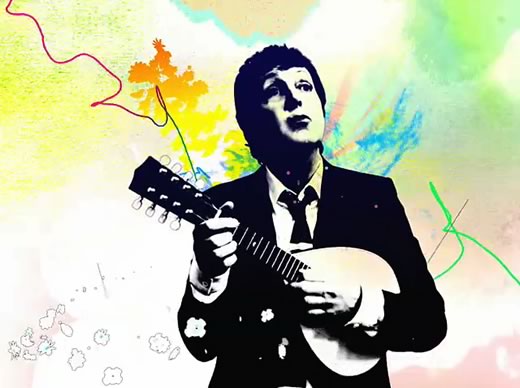
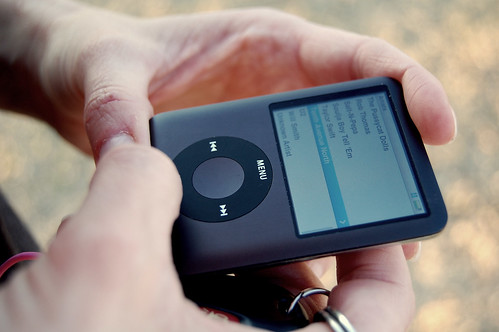
An early example is from 2007, when Paul McCartney appeared in an iPod commercial. Paul is a timeless figure, but Apple was actually doing some smart marketing. 33% of Baby Boomers own an Early Lifecycle Portable Electronic Product (like an MP3 player or a portable DVD player), while the national average for adults is 30% (Lifestyles of Baby Boomers - Mintel Reports).
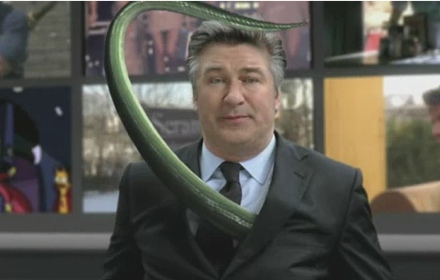
Hulu recently used Alec Baldwin in their SuperBowl commercial. At first glance, it seems like a strange choice because Alec’s age peers are not necessarily what someone would imagine using Hulu. But in actuality, the Wall Street Journal reported that:
When the company launched its public site last March, the largest age group visiting the site were those Internet visitors over 55 years old, accounting for 47% of all site visits, while traditionally younger early adopters accounted for only 17% of traffic. (via 5 Blogs Before Lunch)

The recent movie Last Chance Harvey was actually a cultural landmark for Boomers.
The nice thing here is that the movie is about the lives of the older characters, not just about them being someone’s grandparent or mentor.(Savvy Boomer via PSFK)Boomers are a huge market for everything from Wiis (hey-Nintendo says 25% of their gamers are 50+) to YouTube, and it is important to realize that, really, even granny can get a blog.
images from here, here, here, here, here, here, here, here, and here. Geez.
Tuesday, January 20, 2009
Just Google It
The trailer for the disaster movie 2012 has an great twist.

read more
Instead of having a silly-sounding but nonetheless x-treme call to action like many other movies have, this trailer encourages the viewers to educate themselves about the events inspiring the movie.
Typically, it's very bad if your website isn't one of the first results on Google. But in this case, the movie is making this fact work for them. It's actually making Google work for it, too.
Following examples like the Blair Witch project ("No, man, that stuff is REAL"), 2012 is attempting to utilize outside information that will hopefully create more hype about the movie.
The accompanying line is notable, too. "Find out the truth" corresponds with the online emphasis on truth and reality, as evidenced in numerous studies and websites devoted to uncovering scams.
View the trailer here and of course, google 2012 for yourself.
Tuesday, January 6, 2009

Sunday, January 4, 2009
Happy New Year!
 Sure it might be different and sometime difficult. But to me, that sounds like fun. Cheers!

Friday, December 19, 2008
8th Wonder of the Fast Food World

Google has failed me.
I cannot find any proof of this one, incredible culinary innovation that rocked my world.
read more
No joke.
One evening, my friend and I passed by a McDonalds and did a double take. "Does it say Potato Dippers!? And Tangy Tomato Sauce?" By George, it did.
Now, like 75% of the US population, I am a huge french fry fan. They're crispy, salty, and taste great with ketchup. I loved them for who they are.....but I had no idea there were bigger and better things out there.
Namely Potato Dippers.
It had never occurred to me that such a simple but incredible meal staple could be any way improved on. But McDonald's had taken it to the next level. They engineered a french fry that was perfectly ergonomically compatible with the [Tangy Tomato] sauce that it complimented so well.
Seriously, guys, this was awesome. Instead of the stick-like french fries, the potatoes were hollowed out so that they were a trough meant for dipping.
Unfortunately, the only proof I have is this one picture I took in haste before I started eating.

But imagine the cross section of the french fry is something more like:

Ingenious.
BUT the next time I went to the same McDonalds (Two weeks later. Tops.), I was told that the promotion was over. Worse, I have not been able to find any other evidence that these existed. I don't understand why something so wonderful would exist for such a short time.
The moral of the story is twofold.
Just because something has been around for a long time doesn't mean that it can't be improved upon.
And also, get it while it lasts.
Image from Trendhunter.
Tuesday, December 9, 2008
If you give a college student....
If you give a college student the internet during finals week, they're going to want to check their e-mail.
read more
If they check their e-mail, they might find a notification from Facebook.
They're going to want to see what the notification is, so they're going to sign onto Facebook.
Once they go onto Facebook, they're going to respond to the notification.
And if they want to gossip about the notification, they're going to have to sign on to AIM.
If they're signed onto AIM, they might as well listen to their iTunes.
After they've been on AIM for a while, they're going to start to wonder if they've gotten any more e-mails....
Sunday, December 7, 2008
Live East, Die Young
I went to the opening of POW (Pictures on Walls) this weekend in Shoreditch and discovered two new artists to fall in love with.
The POW festival was a great communal effort to launch a street art gallery/ store.
read more
Of course, there was a Banksy exhibition there.


The entire road was closed down and full of little modifications (in addition to big additions).


The POW festival was a great communal effort to launch a street art gallery/ store.
read more
Of course, there was a Banksy exhibition there.

Anyway...to the two artists! Btoy and Simon Munnery.
By the time I got there on the second day of the exhibition, everything from Btoy's collection had been sold.


Simon Munnery wrote pamphlets titled "How to Live." I loved the short, witty collection so I bought it (plus it had an excellent list of security guard jokes). Here are some quotes:
By the time I got there on the second day of the exhibition, everything from Btoy's collection had been sold.


Simon Munnery wrote pamphlets titled "How to Live." I loved the short, witty collection so I bought it (plus it had an excellent list of security guard jokes). Here are some quotes:
What do you get for the man who has everything?and finally...
Might I suggest a gravestone inscribed with the words: so what?
All men are brothers.
Hence war.
You can't fool all the people all the time. But you can try. It's called advertising.
Subscribe to:
Posts (Atom)

